

 CN
 EN

Against the backdrop of the 14th Five-Year Plan and the "Dual Carbon" goals, China is undergoing a profound transition from the traditional high-energy-consumption development model to a green, low-carbon and efficient one. The cornerstone of this transition lies in the accurate grasp of the baseline national energy consumption. To this end, the National Development and Reform Commission, together with multiple authorities, has vigorously promoted the construction of online energy consumption monitoring systems for key energy-consuming entities.
This system is more than a simple data uploading tool. It connects the national macro energy strategy at the top with every kilowatt-hour of electricity and every ton of coal on the frontline of enterprise production at the bottom. It serves as core infrastructure for the country’s shift from the "dual control" of energy (total energy consumption and energy intensity control) to the "dual control" of carbon emissions. This article comprehensively breaks down the construction objectives, policy background, legal basis, and far-reaching significance of this system for enterprises and governments.
I. Core Objectives and Practical Significance: More Than Data Uploading, It’s About "Careful Calculation"
Key energy-consuming entities across the country account for approximately 60% of national total energy consumption. They are the main force of energy use and the primary battlefield for energy conservation and emission reduction. The fundamental purpose of building the online energy consumption monitoring system is to achieve refined and digitalized energy management through new-generation information technologies (Internet of Things, big data, cloud computing).
Its practical significance lies in two dimensions:
For the state (macro level): It provides real-time and accurate data support for the assessment of total energy consumption and energy intensity "dual control", offers scientific evidence for formulating carbon peaking and carbon neutrality pathways and establishing the carbon emission trading market, and facilitates the optimization of the national industrial structure.
For enterprises (micro level): It puts an end to the extensive energy management of the past. By precisely measuring energy consumption data of workshops, production lines and key equipment, it helps enterprises identify energy waste points, tap energy-saving potential, realize "cost reduction and efficiency improvement", and advance the transformation from traditional manufacturing to intelligent manufacturing.
II. Policy Support: Evolution from "Encouragement" to "Mandatory Requirements"
The state has set clear requirements on the timetable and roadmap for system construction:
Launch of top-level design (2017): The National Development and Reform Commission and the General Administration of Quality Supervision, Inspection and Quarantine jointly issued the Work Plan for the Promotion and Construction of Online Energy Consumption Monitoring Systems for Key Energy-consuming Entities (Document No. FGHH〔2017〕1711), officially kicking off the national system construction. It required all regions to improve the energy metering system and strengthen situation analysis and early warning.
Accelerated construction (2019): The National Development and Reform Commission and the State Administration for Market Regulation issued the Notice on Accelerating the Construction of Online Energy Consumption Monitoring Systems for Key Energy-consuming Entities (Document No. FGBH〔2019〕424), setting rigid deadlines: all key energy-consuming entities shall complete the construction of terminal access systems and realize daily data uploading by the end of 2020.
III. Legal Basis: Supported by Laws and Regulations
The construction of online energy consumption monitoring systems is not only a policy requirement but also backed by laws and standards:
Legal dimension: Since the revised Energy Conservation Law of the People's Republic of China took effect in 2008, the state has continuously strengthened the legal binding force of energy conservation. In 2018, seven ministries and commissions including the National Development and Reform Commission jointly issued the Measures for the Administration of Energy Conservation of Key Energy-consuming Entities, which clearly stipulates that key energy-consuming entities have the obligation to implement energy conservation regulations and strengthen energy conservation management. Online energy consumption monitoring serves as a basic means for enterprises to fulfill this obligation and achieve rational energy use.
Standards and specifications (2018): The National Energy Conservation Center released the Technical Specifications for Online Energy Consumption Monitoring Systems for Key Energy-consuming Entities. This system covers the entire process including basic standards, technical functions, data protocols, safety inspection, acceptance and maintenance, energy metering instruments and industrial applications, ensuring system standardization and data interconnection.
IV. Top-level Design: Three-tier Architecture with Distinct Responsibilities
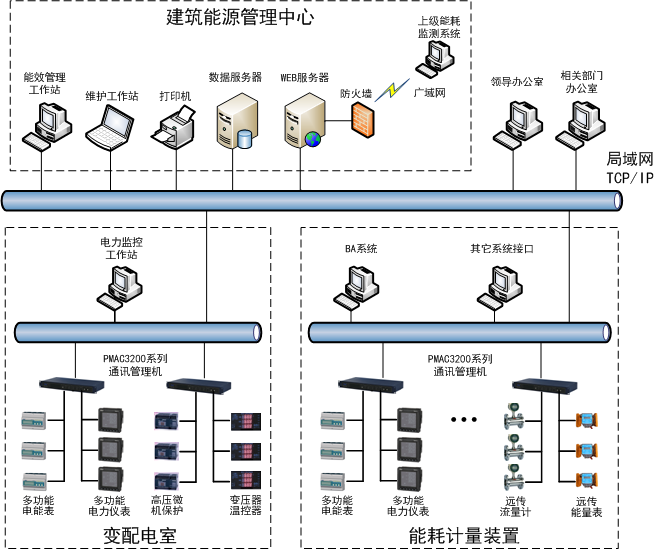
The system adopts a three-tier architecture of "national platform – provincial platform – enterprise terminal system", serving national ministries, energy conservation authorities at all levels, market supervision departments and key energy-consuming entities.
V. Service Orientation: A "Advisor" for Governments and a "Manager" for Enterprises
Government side (provincial platform): Focused on decision support. The platform aggregates massive data to provide accurate data support for government departments to formulate regional energy conservation and emission reduction plans, implement "dual control" assessment, compile project investment budgets, and promote carbon emission trading and carbon verification and other macro decisions.
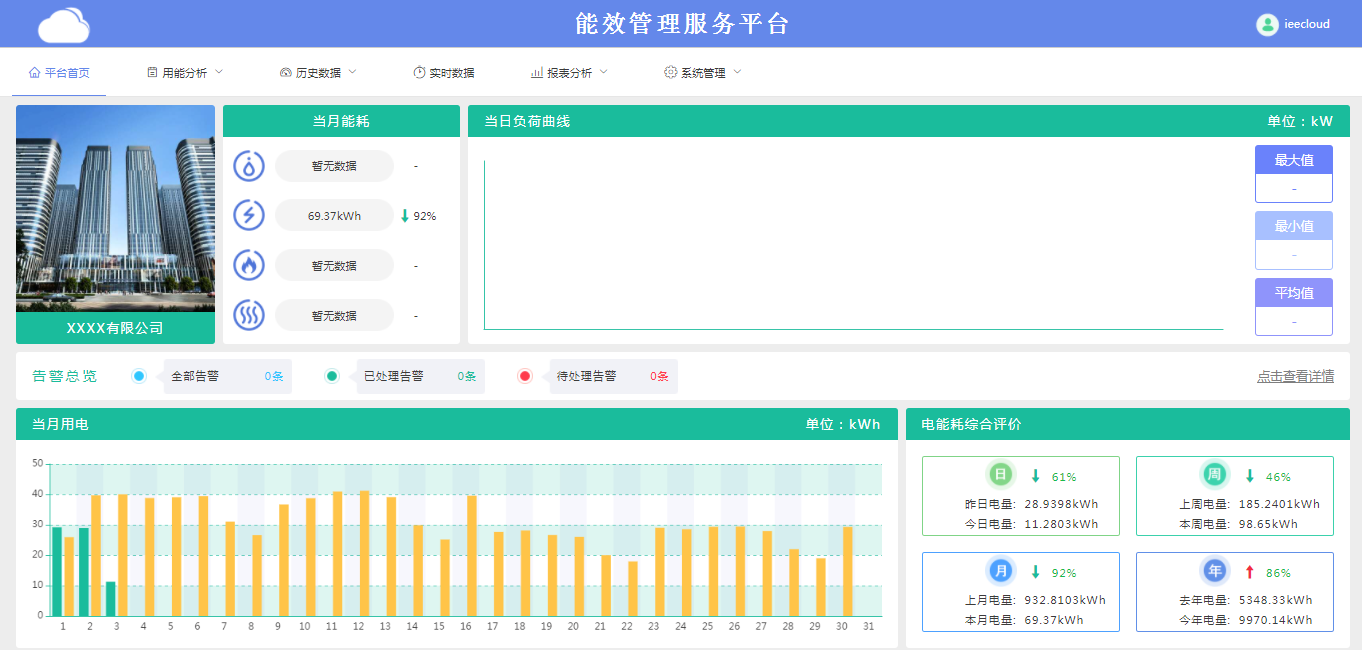
Enterprise side (terminal access system): Focused on refined management. By building an internal information-based energy management platform, enterprises can realize precise measurement of energy-consuming equipment, explore energy-saving potential through data analysis, formulate renovation plans, and ultimately reduce energy costs and improve product quality.
VI. Purpose of Government Data Acquisition: Building a "Dashboard" for Macro Governance
As system construction advances, massive energy data keeps accumulating and its strategic value becomes increasingly prominent. The government collects data for far more than statistical purposes:
Macro regulation: Accurately grasp the real-time dynamics of energy consumption across regions and industries, and scientifically balance energy supply and demand.
Policy foundation: Provide irrefutable data basis for "dual control" indicator assessment, differential electricity price policies and carbon emission quota allocation.
Economic correlation analysis: Explore the relationship between energy consumption and GDP growth, and evaluate the effectiveness of economic structure transformation.
VII. Concept Clarification: Relationship Between Energy Consumption Monitoring Systems and Industrial Internet
Concepts such as Industrial Internet, Industry 4.0 and intelligent manufacturing form a broad industrial ecosystem involving three core elements: network, data and security. The online energy consumption monitoring system is an in-depth application of the Industrial Internet in the specific scenario of "comprehensive energy utilization". It penetrates new-generation information technologies into workshops and key energy-consuming equipment. It is a vivid example of the Industrial Internet moving from concept to practical application, and an indispensable "cell-level" project in the digital transformation of enterprises.
Conclusion: Data Drives the Future, Green Powers Development
The construction of online energy consumption monitoring systems marks a key step for the state to advance the modernization of governance capacity and achieve green and low-carbon development. For key energy-consuming entities, it is not only a statutory obligation to fulfill, but also an excellent opportunity to cut costs and boost efficiency through digital means. From top-level design to workshop frontlines, the last mile of this transformation needs scenario-focused solutions such as Dorbas energy monitoring equipment to connect. It converts the flow of every watt of electricity and every cubic meter of gas into analyzable and traceable data assets, enabling reliable evidence for national macro decisions and measurable references for enterprises to save energy and reduce consumption. Only by embracing data can we embrace a green future.