

 CN
 EN

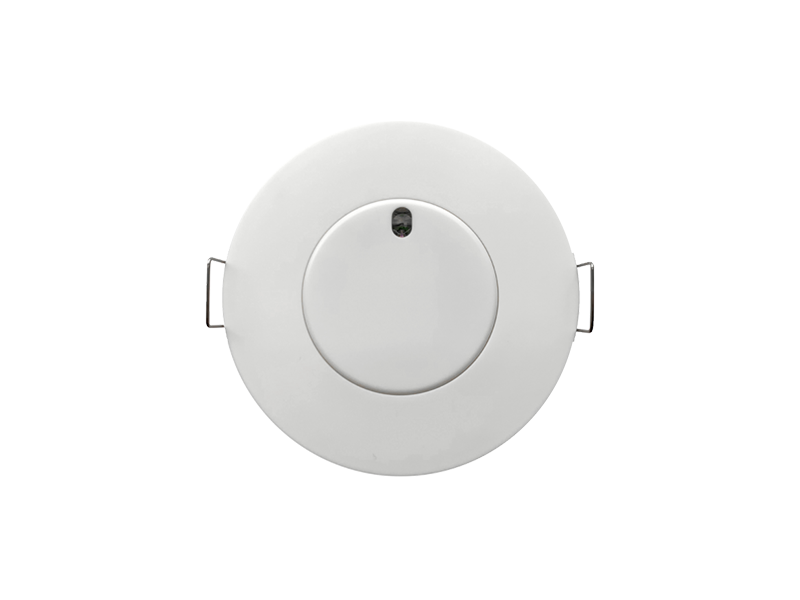
Presence sensor
DTS615-K
KNX presence detector has a built-in illuminance sensor. It can automatically control loads according to ambient illuminance values to minimize load operating cycles, meeting the comfort, energy-saving and safety requirements of smart buildings. It is mainly applied in offices, meeting rooms, lounges, corridors, warehouses, stairwells and other spaces.
Illuminance sensing range: 1 lux ~ 60k lux;
Day/night control modes can be independently configured and externally switched;
Motion detection function supporting 3 types of output data, including switch value, dimming value and scene value;
Operating modes: Manual mode, fully automatic mode, semi-automatic mode; standby mode available for dimming output type;
Supports setting of threshold brightness for load operation;
Motion detection with 1~10 adjustable sensitivity levels;
Supports configuration of load active period and idle period;
Master-slave detector networking function;
Illuminance value output with periodic cyclic transmission;
Switch output triggered by brightness change;
Illuminance value can be calibrated externally or internally.
Auxiliary Power Supply: DC 12V~30V
KNX Bus Power Supply: DC 21V~31V
Supply Current: <15mA
Power Consumption: <450mW
Programming Button: Press the cover
Programming Indicator: Red LED
Max radius for motion detection: 4~5m at mounting height of 3m
Max radius for minor motion detection: 4~5m at mounting height of 3m
Max radius for breathing detection: 3~4m at mounting height of 3m
Adjustable sensitivity levels: 10 levels
Mounting Height: 2.5~3.0m; max 8m for SS3007
Mounting Type: Ceiling mounted
Ambient Light Measurement Range: 1 lux~60k lux
Operating Temperature: -5°C~+45°C
Long-term Storage Temperature: -25°C~+55°C
Transport Temperature: -30°C~+70°C
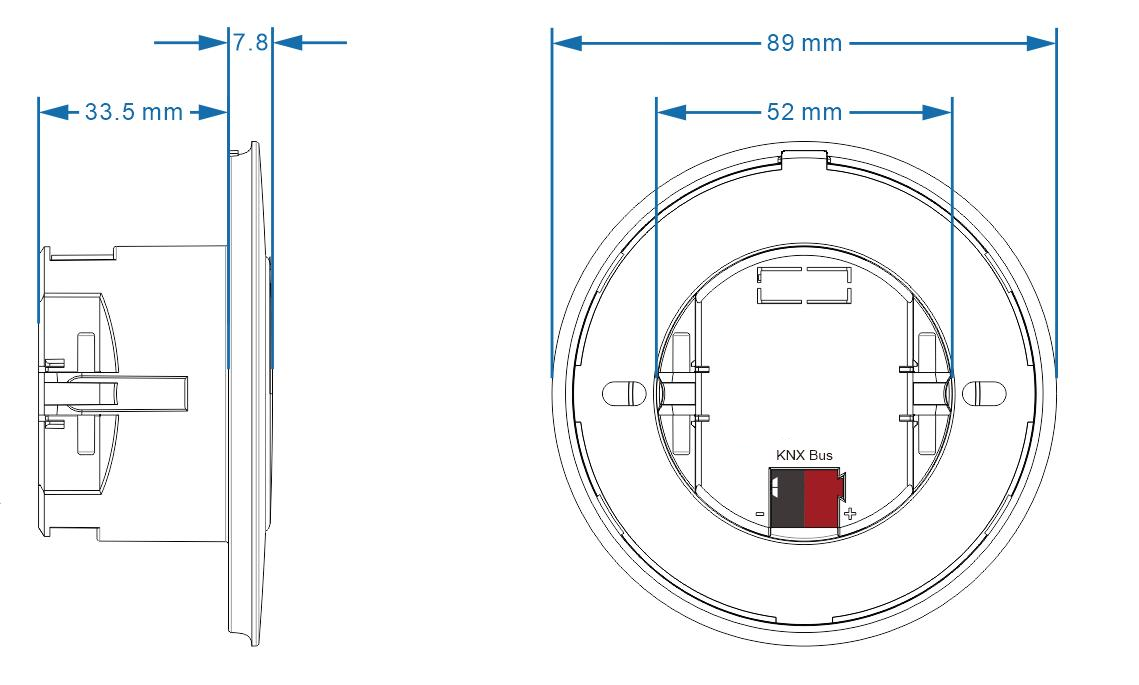
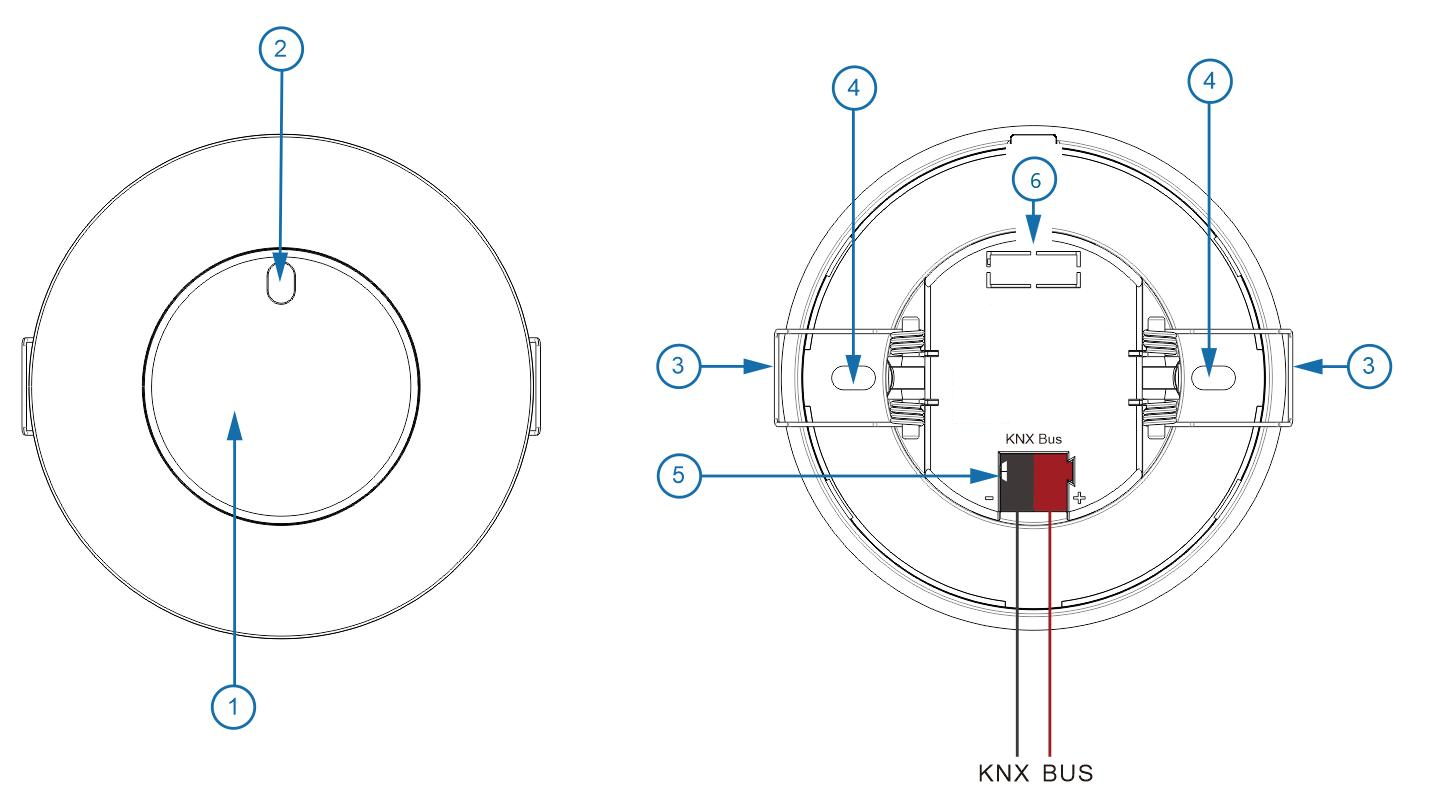
(1) When powered on for the first time, the sensor enters self-test mode and switches to normal operation after 20 seconds. No external motion will be detected during initialization. (The SS3007 starts working immediately upon power-up without self-test waiting.)
(2) Keep the sensor away from large metal plates, glass and other high-density materials to prevent false triggering.
(3) Do not place continuously vibrating objects such as oscillating fans near the sensor, as vibration signals may be identified as motion and trigger the sensor.
(4) Avoid shining unnecessary light onto the illuminance sensor window, which will interfere with ambient light measurement.
(5) Microwave sensors can penetrate building walls. Microwave signals leaking outside the wall may detect moving objects beyond the monitored area and cause false alarms. Select proper mounting positions and detection ranges during installation to avoid false triggering.

